Search
Quicklinks

Search
Quicklinks
By Arin McKenna
July 10, 2026
The Rain Garden/Pollinator Habitat on NNMC’s El Rito campus is in full bloom
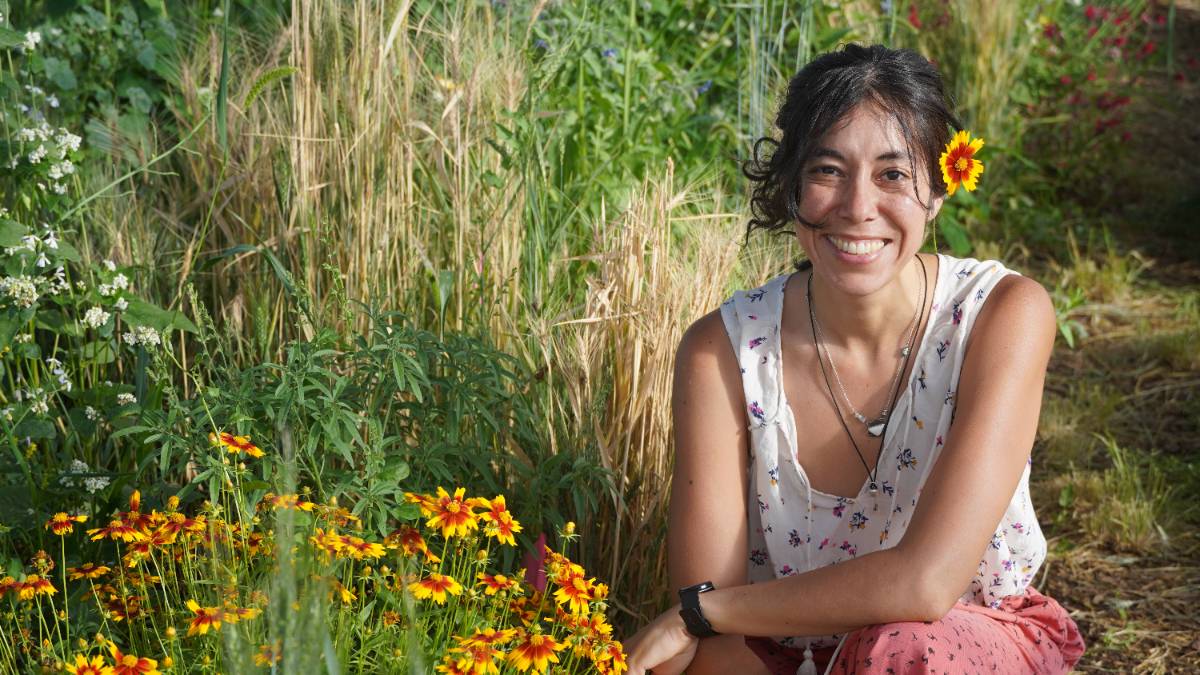
Northern New Mexico College’s El Rito campus is slowly being transformed into a beautiful flowering Rain Garden and welcoming habitat for the area’s pollinators through the devoted work of Lina Alegre, administrative coordinator/continuing education coordinator on the El Rito campus, with the help of committed volunteers and a grant from the Carroll Petrie Foundation. Our community is invited to enjoy the gardens, which are currently in full bloom and are expected to remain so through the summer and into early fall.
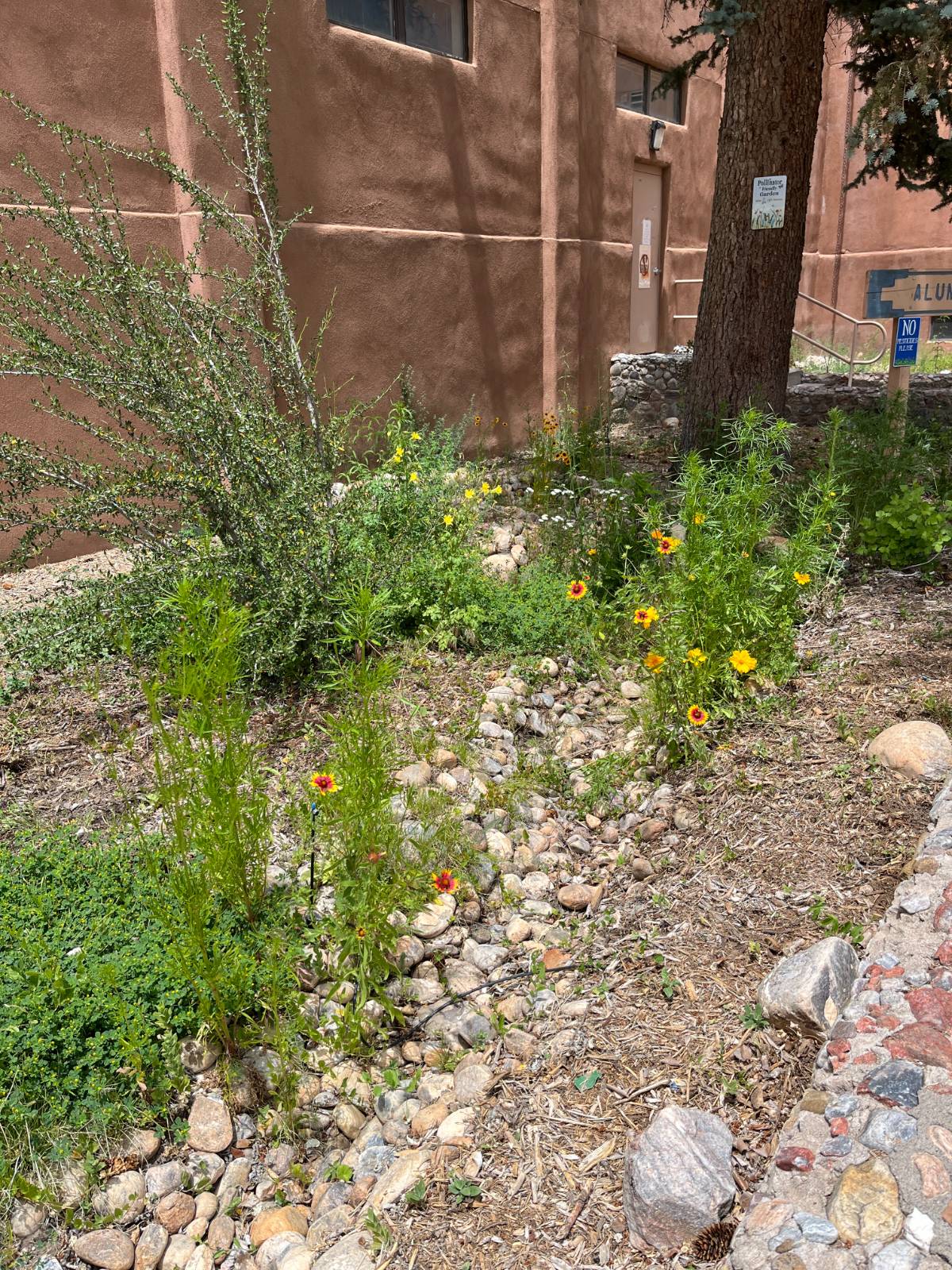 The rain garden and pollinator habitat installation was completed in 2025. The project
transformed underutilized campus ground into a living, functioning ecosystem — designed
to support native pollinators, capture rainwater and serve as an educational resource
for students, staff and the broader El Rito community.
The rain garden and pollinator habitat installation was completed in 2025. The project
transformed underutilized campus ground into a living, functioning ecosystem — designed
to support native pollinators, capture rainwater and serve as an educational resource
for students, staff and the broader El Rito community.
"Our beloved creepy crawlers — the spider, the native bee, the moth — have been on this earth for 400 million years, long before we ever arrived, doing quiet, invisible work that feeds us,” Alegre said. “The tomatoes, the squash, the chile, the fruit trees — none of it reaches our table without them. These gardens are our small act of gratitude, a way of saying: we see you, come home, this was always yours."
The garden was conceived during Alegre’s first year working on the El Rito campus. She saw runoff from the canales being underutilized and damaging buildings. Some of the runoff was directed toward what Alegre calls “two massive mother trees” rooted in beautifully designed rock-walled gardens that were barren of growth.
“I felt the need to be a little more resourceful with the water,” said. “I saw various opportunities to use it to beautify the campus, as well as to be more resourceful with our rain.”
The project was funded through the Carroll Petrie Foundation, a private foundation with a focus on invertebrate conservation, pollinator habitat and ecological education. The $12,000 grant was overseen by Jennifer Pedneau, Program Officer at Carroll Petrie. The Foundation’s interest in NNMC El Rito stems from the campus’s commitment to creating habitat for pollinators in a region where native bee and insect populations are under increasing pressure from habitat loss, drought and pesticide use.
Alongside the physical habitat work, NNMC El Rito applied for and received Bee Campus USA designation through the Xerces Society for Invertebrate Conservation — a national certification program that recognizes colleges and universities committed to supporting pollinators on their campuses. NNMC El Rito is among a small number of rural campuses in New Mexico to hold this designation.
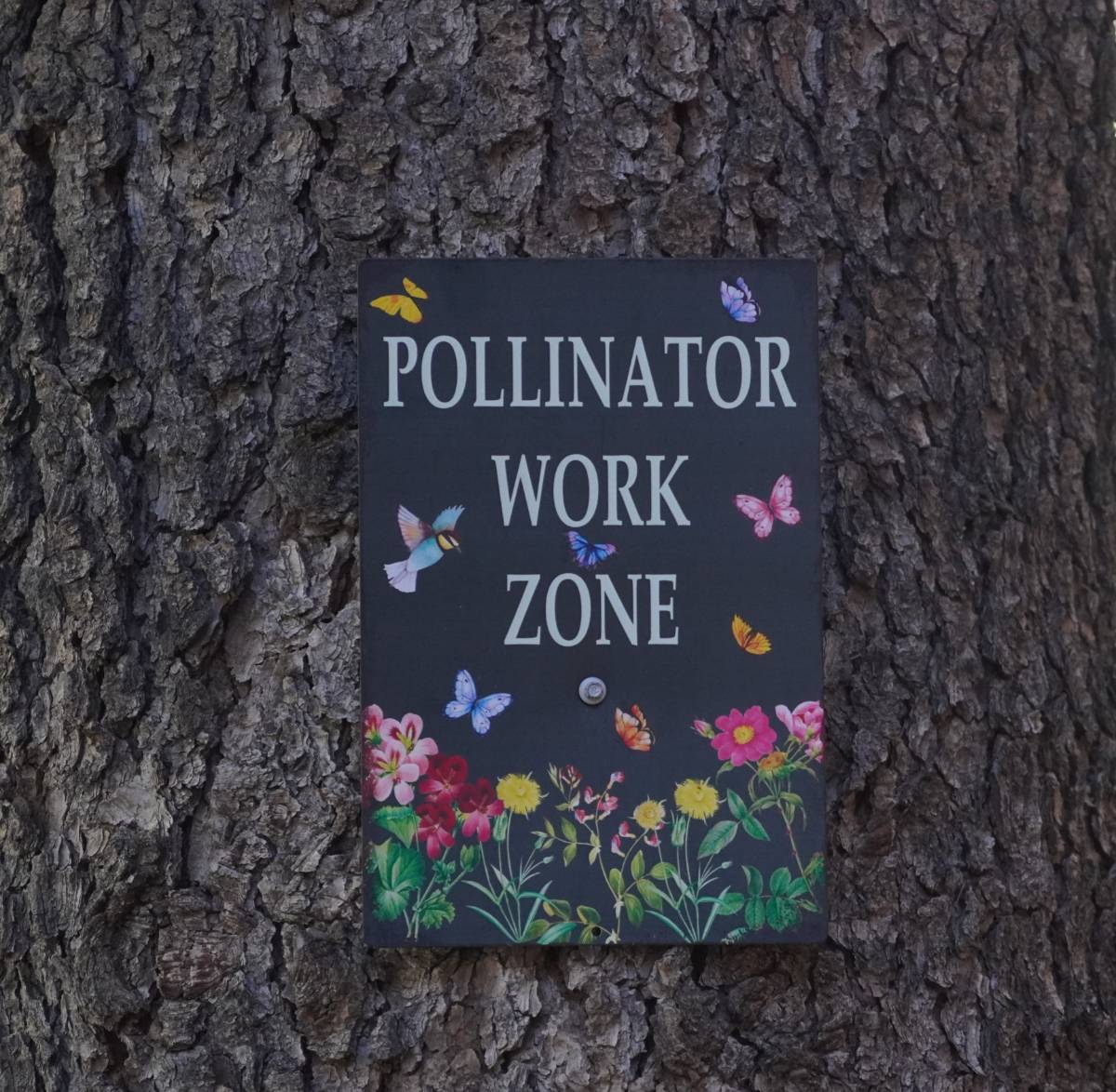 Bee Campus USA requires campuses to establish pollinator habitat, reduce pesticide
use, form a committee and engage in community education, which NNMC El Rito has done
or is actively developing. The facilities department has been working with Alegre
to find natural alternatives to pesticides, fungicides, insecticides and other harmful
chemicals that can harm pollinators. The campus will be offering an Integrated Pest
Management class in July, provided by the Xerces Society, as part of its commitment
to educational programming.
Bee Campus USA requires campuses to establish pollinator habitat, reduce pesticide
use, form a committee and engage in community education, which NNMC El Rito has done
or is actively developing. The facilities department has been working with Alegre
to find natural alternatives to pesticides, fungicides, insecticides and other harmful
chemicals that can harm pollinators. The campus will be offering an Integrated Pest
Management class in July, provided by the Xerces Society, as part of its commitment
to educational programming.
“The reason why I love doing this is because my background is in soil health and permaculture, so I really appreciate healthy landscapes and how they feed humans as well. We need them for our own health,” Alegre said. “I like to see life in a holistic way. I don't think we're separate from nature, so if nature is not doing well, we’re not doing well.”
The project has created over 1,400 square feet of native pollinator habitat on the El Rito Campus, including:
•  Rain gardens designed to capture and slow rainwater runoff, reducing erosion and recharging
soil moisture.
Rain gardens designed to capture and slow rainwater runoff, reducing erosion and recharging
soil moisture.
• Native plantings selected for New Mexico’s high desert environment, including species
that support native bees, butterflies and other pollinators through the growing season.
• A drip irrigation system installed by DC Ltd. Co. to establish plants through their
first critical seasons.
• Rain chains — a beautiful and functional alternative to standard downspouts —slow
the water's descent, reduce erosion at the base of the building and direct the flow
toward the garden beds.
• Educational plant labels and protective signage throughout the habitat.
This year the garden is in full bloom, filled with native plants that were started from seed in the newly renovated greenhouse, purchased from Plants of the Southwest or sprouted from a wildflower seed mix sown directly in the garden beds. The greenhouse also hosts a healthy population of pollinators.
“Now we're giving back, and that really feeds me,” Alegre said. “What I didn't see coming was the fact that now every time I come to my office, especially during spring, summer, and fall, I get to see a beautiful garden every time. That's really, really wonderful.”
Those visiting the El Rito campus for classes, events, the monthly Food Depot food distribution and the seniors who come to enjoy the greenhouse weekly are also able to spend time in the garden.
A Community Effort
One of the most remarkable aspects of this project is how much of it was accomplished through volunteer labor, which saved significant budget dollars and redirected funds toward infrastructure like irrigation.
• River Source interns contributed five intensive days of hands-on work — site preparation,
planting and mulching — valued at $4,000 in in-kind labor.
• Ghost Ranch volunteers contributed three additional days of planting and garden
finishing, valued at $1,200.
• Native plants and seeds were sourced from Plants of the Southwest, with some of
the plantings started in the campus greenhouse.
• Irrigation and rain chain installation was performed by DC Ltd. Co.
Total project value, including $6,400 from in-kind volunteer contributions, reached $18,119.69 — a 51% increase in impact beyond the direct grant expenditure of $11,719.69.
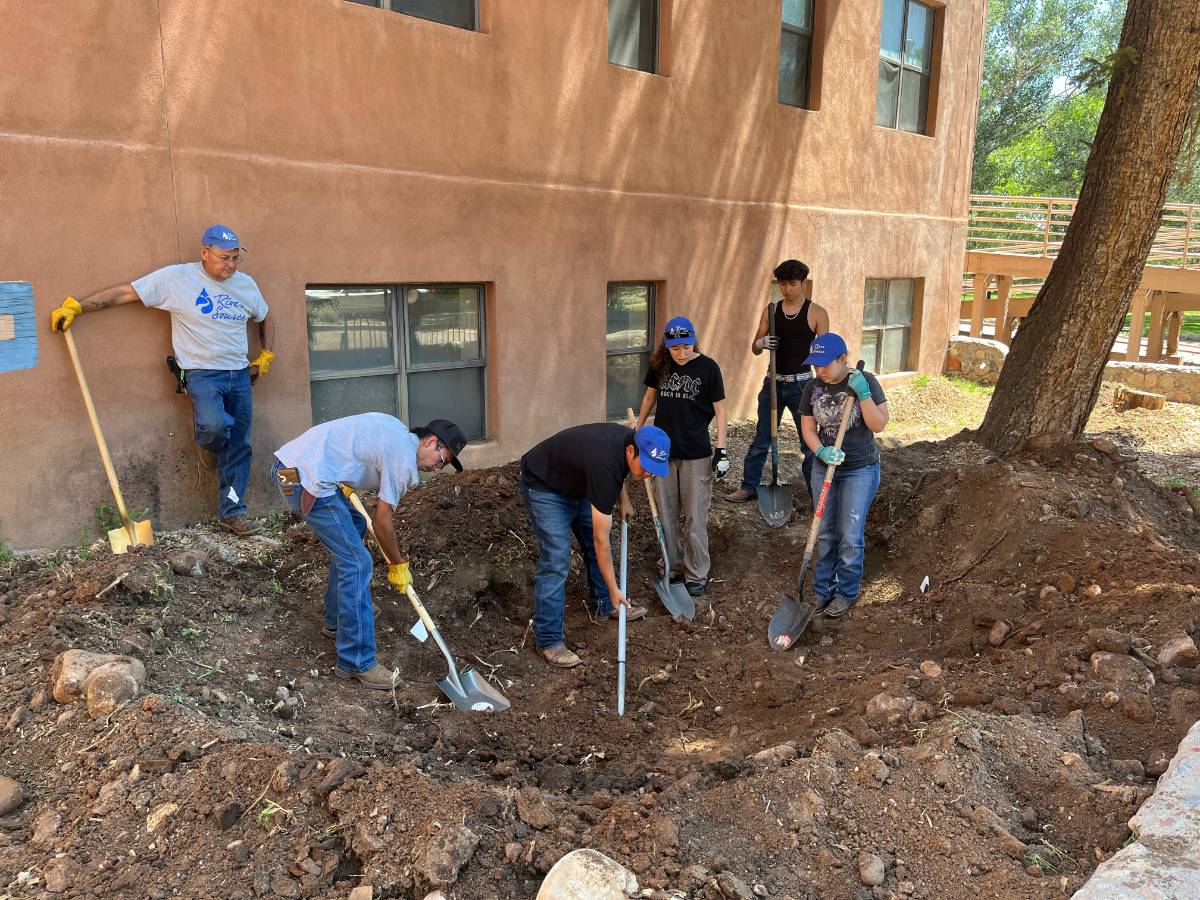 Local youth from River Source Watershed Academy did the bulk of the work redesigning
the gardens for rainwater catchment, preparing the soil and planting. The work involved
digging up extremely compacted soil, encountering tree roots and blocks of cement.
Local youth from River Source Watershed Academy did the bulk of the work redesigning
the gardens for rainwater catchment, preparing the soil and planting. The work involved
digging up extremely compacted soil, encountering tree roots and blocks of cement.
“We were digging in hard soil last June. It was a super hot month, and we were going from morning until afternoon. It was hard work. We found some roadblocks, but we didn't stop. We slowed down and worked our way through,” Alegre said. “I feel so grateful for River Source, and these youth that really gave their all until they were exhausted.”
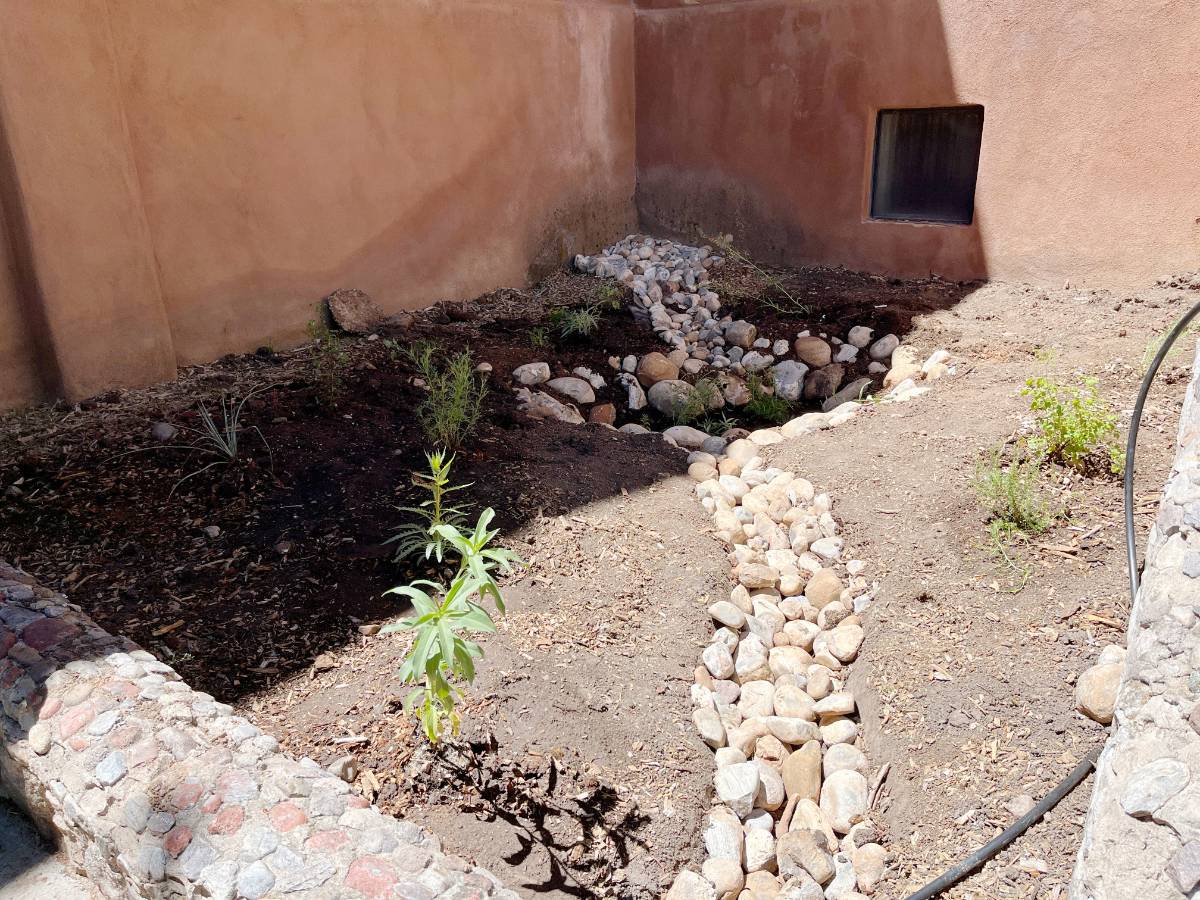
The youth created a rock-lined swale and dry creek bed that channels rainwater toward the rain garden basin. A swale is a shallow, gently sloped channel designed to move water across the landscape slowly. The rounded river rock and cobble lining it slows the flow, reduces erosion and encourages water to infiltrate into the ground rather than run off. The volunteers brought the project full circle by embedding the new starter plants, which let them see what all their hard work was leading to.
“These River Source Watershed Academy youth are locals, so I told them, you can always come and visit these rain gardens that you helped install, see what you've done and take credit, because you worked really, really hard,” Alegre said. “So hopefully they're gonna come and say, ‘Hey, I helped build that.’”
What’s Next
Building on the success of the first grant cycle, NNMC El Rito is developing a second phase of habitat work with continued Carroll Petrie Foundation support. Plans include expanding pollinator habitat into the Alumni Memorial Orchard, establishing two additional native planting areas on campus, and developing a formal Integrated Pest Management (IPM) program in partnership with the Xerces Society.
“Establishing an understory of pollinator plants will provide more habitat for these insects, then they will pollinate the fruit bearing trees,” Alegre said.
Alegre continues to see expanded possibilities for the gardens, whether that’s a new plant to add or a new garden to design, and her appreciation for what is has already been created grows every day.
“I love how they look. I feel excitement seeing the beauty. Before, this was just bare soil baking in the sun, and now it’s teeming with life,” Alegre said. “What also excites me is the possibility for these gardens to inspire people, a subtle hint of what is possible.”
Cover image: Lina Alegre in the greenhouse with coreopsis, one of the flowers now found in the Rain Garden.
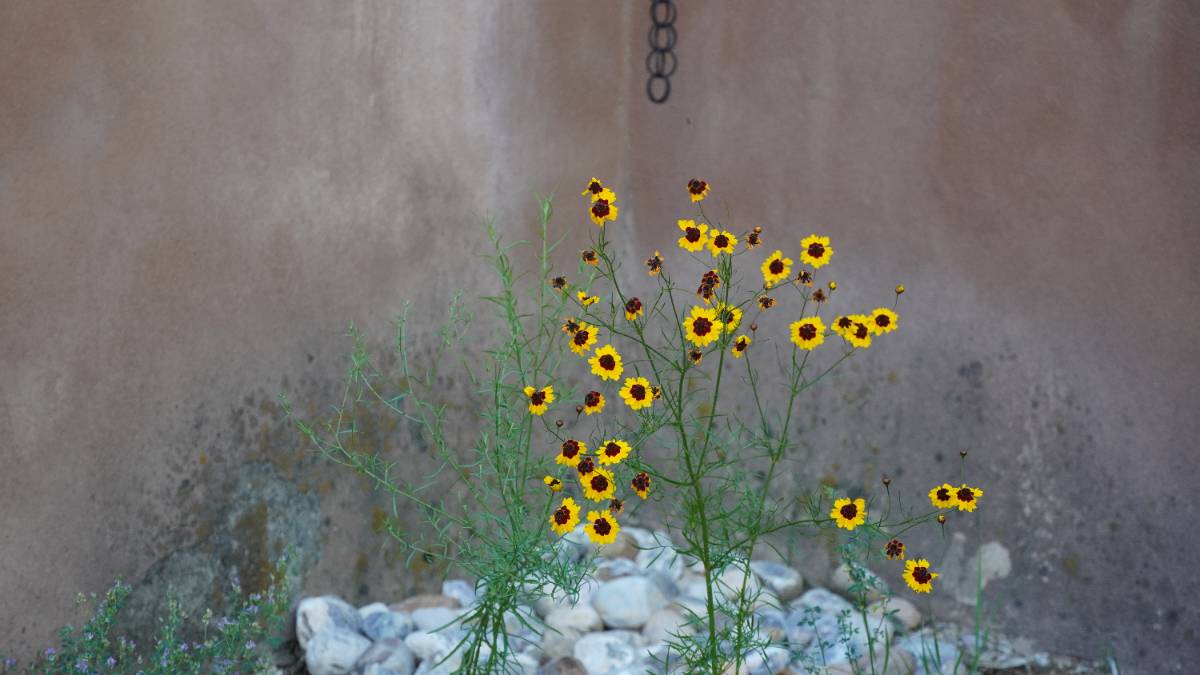
Coreopsis blooms in a rock-lined swale. The end of a rain chain is visible behind the plant.
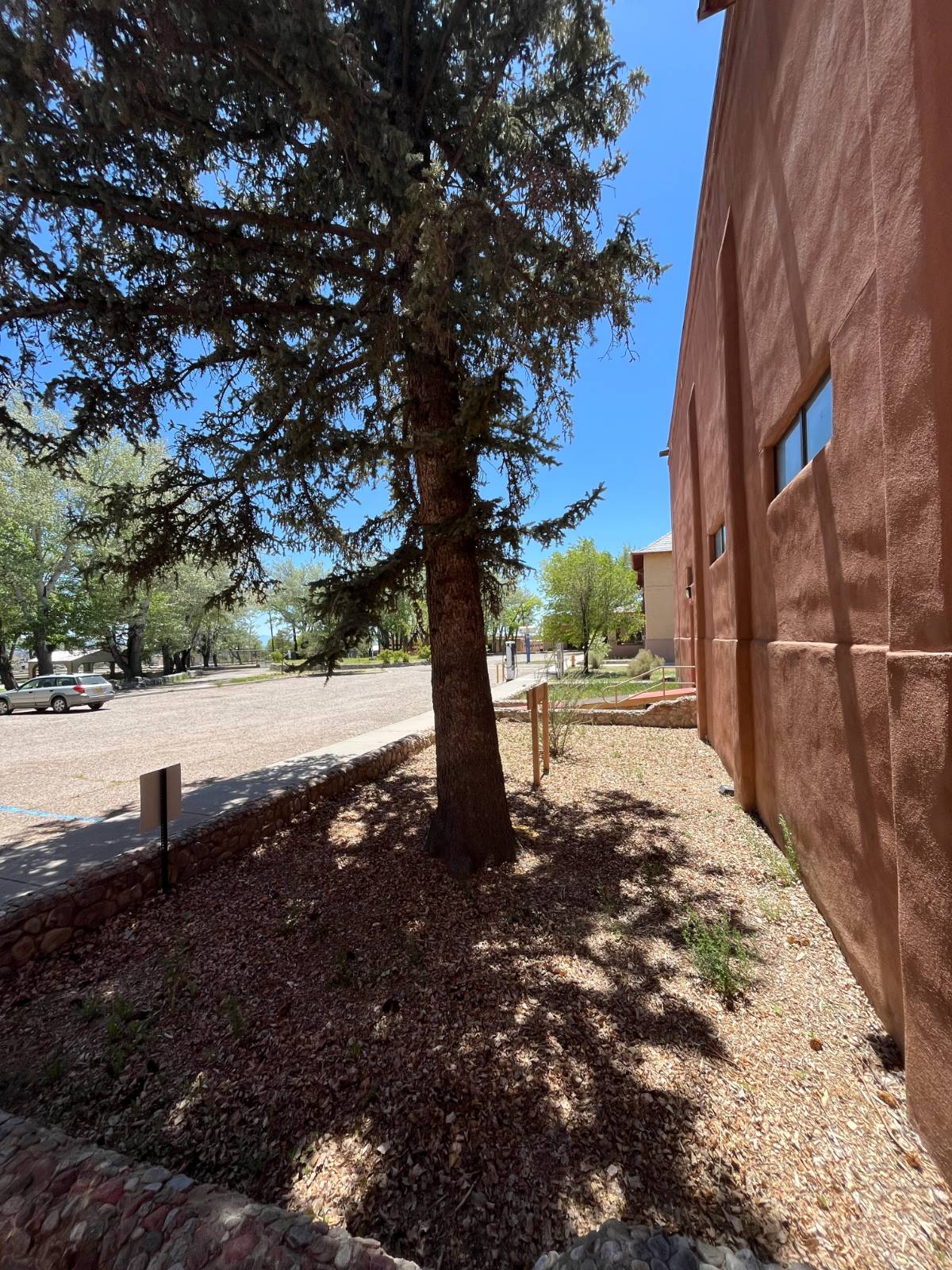
Garden area prior to the establishment of the Rain Garden
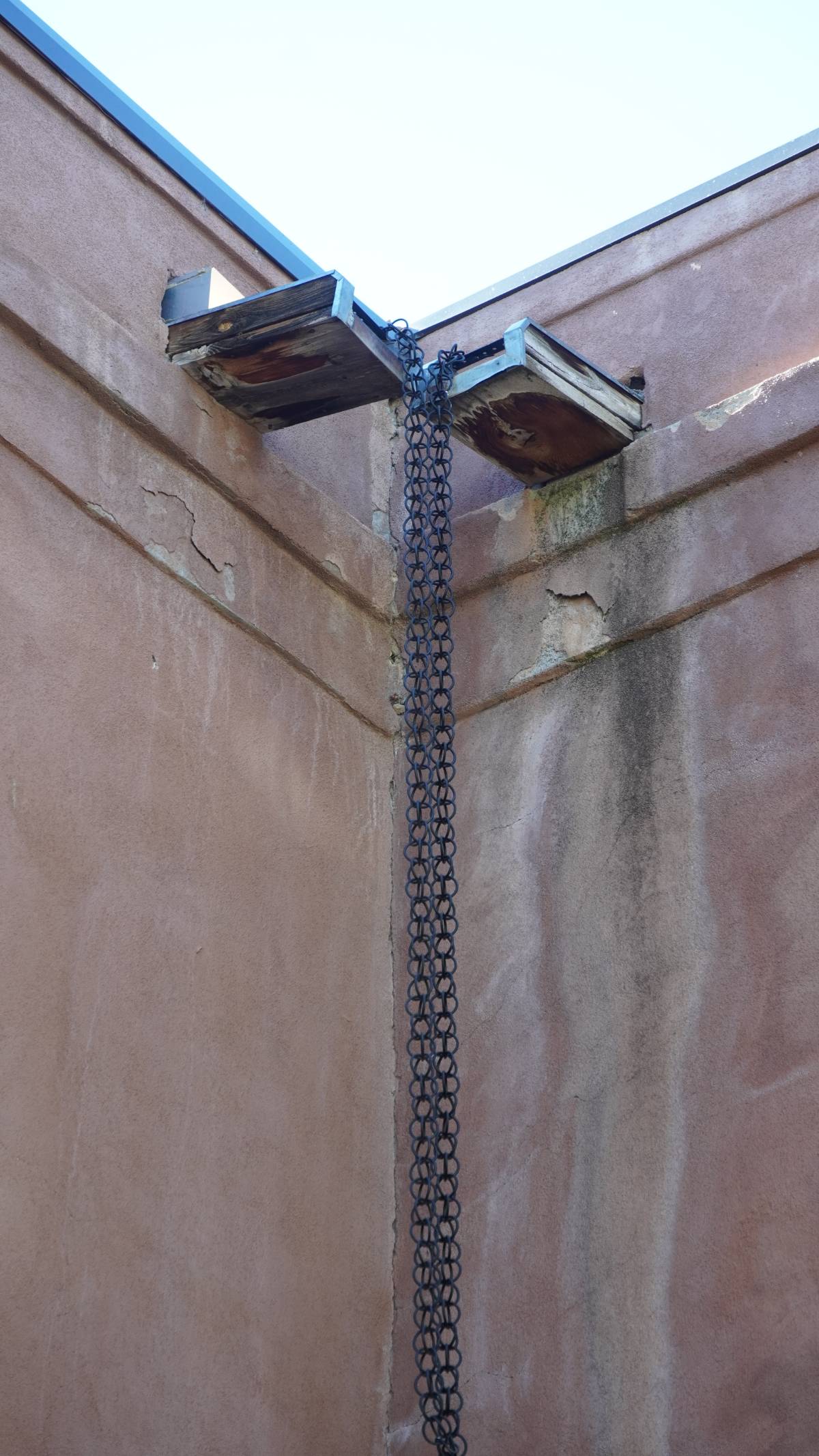
Rain chains hang from canales to direct runoff to the garden. The damage from undirected water flow is visible on the walls.